
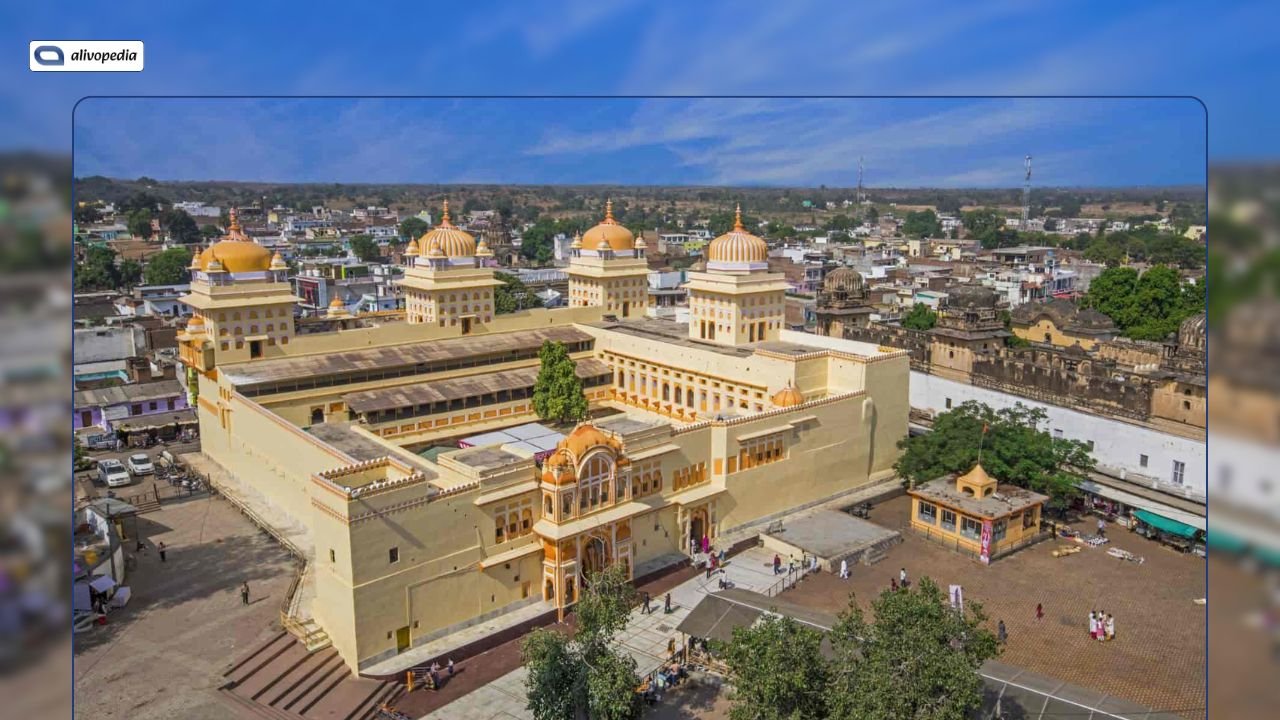
The Orchha Ram Mandir, also known as the Ram Raja Mandir, holds a singular and unmatched place in Hindu Itihaas. It is the only mandir in Bharat where Bhagwan Ram is worshipped not just as a deity, but as a living king. Located in the historic town of Orchha in Madhya Pradesh, this mandir seamlessly blends spirituality, royal tradition, and historical memory.
Unlike other Ram mandirs where Bhagwan Ram is worshipped in his divine form alone, Orchha Ram Mandir follows royal customs—complete with guards, salutes, and ceremonial respect—affirming Bhagwan Ram’s status as the King of Orchha.
Historical Background of Orchha
Orchha was founded in the early 16th century by Rudra Pratap Singh, the Bundela Rajput ruler. Strategically located on the banks of the Betwa River, Orchha grew into a powerful and culturally rich kingdom. The Bundela rulers were known for their devotion to Sanatan Dharma and their patronage of temples, art, and learning.
The Orchha Ram Mandir emerged from this deeply devotional and royal atmosphere, shaped by faith rather than architectural planning alone.
The Divine Itihaas Behind Orchha Ram Mandir
The story of Orchha Ram Mandir is rooted in devotion and royal sacrifice. According to well-preserved tradition, Queen Ganesh Kunwari, the wife of King Madhukar Shah, was a devoted bhakt of Bhagwan Ram. It is believed that Bhagwan Ram appeared to her in a vision and agreed to come to Orchha under one condition—that he would be the king of the land and would be installed at the place where he was first kept.
The idol of Bhagwan Ram was brought from Ayodhya and temporarily placed in the queen’s palace, as the main mandir was still under construction. However, when the time came to shift the idol, it was believed that Bhagwan Ram refused to move, honoring his condition.
Thus, the palace itself became the mandir, and Bhagwan Ram was enthroned as Ram Raja, the ruling sovereign of Orchha.
Why Bhagwan Ram Is Worshipped as a King?
To this day, Bhagwan Ram receives royal treatment in Orchha. The mandir follows traditions that reflect governance rather than ritual worship alone. Guards from the local administration offer salutes, a daily royal schedule is followed, and official protocols are observed during aarti.
This unique practice symbolizes the idea that Ram Rajya is not merely an ideal but a living principle, rooted in justice, compassion, and dharma.
Architecture of Orchha Ram Mandir
Architecturally, the Orchha Ram Mandir is distinct from traditional Hindu temples. Originally built as a palace, it reflects Bundela-era architecture, featuring:
- Fortified walls
- Elevated balconies
- Large courtyards
- Minimal sculptural ornamentation
The structure stands at the intersection of royal residence and sacred space, reinforcing the belief that true governance is an extension of dharma.
Orchha Ram Mandir is not just a place of worship—it is a living symbol of Hindu civilizational consciousness. It reflects the belief that rulers must govern with moral responsibility, humility, and devotion to dharma.
Daily rituals are conducted with deep reverence, and festivals such as Ram Navami and Diwali draw thousands of devotees from across Bharat.
Orchha Ram Mandir in Hindu Itihaas
The mandir stands as a reminder that Hindu Itihaas is not limited to texts—it lives through traditions, institutions, and collective memory. Orchha Ram Mandir represents a rare continuity where faith, governance, and public life converge without conflict.
It reinforces the civilizational idea that divinity and duty are inseparable, and that leadership must be rooted in ethical principles.
Today, Orchha is a major spiritual and heritage destination. Visitors to the Ram Mandir also explore nearby landmarks such as Orchha Fort, Chaturbhuj Mandir, and the Betwa ghats.
Despite growing tourism, the sanctity of the mandir remains intact, with strict adherence to age-old customs.
Why Orchha Ram Mandir Matters Even Today?
In an age where power is often disconnected from morality, Orchha Ram Mandir serves as a timeless reminder that true kingship is service, not dominance. Bhagwan Ram’s presence as Ram Raja symbolizes governance anchored in truth, sacrifice, and compassion.
This mandir is not merely a monument—it is a living philosophy.
The Orchha Ram Mandir is one of the most extraordinary temples in Bharat, where Bhagwan Ram continues to reign as a king, not in name but in spirit. Rooted deeply in Hindu Itihaas, devotion, and royal tradition, it stands as a powerful symbol of Ram Rajya in practice.
For seekers of history, spirituality, and cultural depth, Orchha Ram Mandir offers an experience that transcends time.

- मंत्र शक्ति विज्ञान: ध्वनि, चेतना और ऊर्जा का प्राचीन रहस्य - February 9, 2026
- How ‘Dhurandhar’ and ‘Haq’ Became Global OTT Hits: The Rise of Confident Indian Storytelling - February 8, 2026
- संत रविदास: भक्ति, सम्मान और समाज में समानता का ऐतिहासिक दृष्टिकोण - February 5, 2026